Finding the Right Blanket Factory Partner: A B2B Buyer‘s Guide to Global Manufacturers
Introduction: The Global Landscape of Blanket Manufacturing
For B2B buyers—whether launching a textile brand, sourcing hospitality linens, or building a private-label collection—choosing the right blanket factory is a decision with far-reaching consequences. The global manufacturing landscape presents two fundamentally different models: heritage-focused producers with century-old legacies, and volume-oriented manufacturers offering competitive pricing and flexible minimums.
This guide provides an objective analysis of notable players across North America, Europe, and Asia, including Faribault Mill, Amana Woolen Mill, MacAuslands Woollen Mills, Barker Textiles, and HFI Bedding. The goal is not to declare a single “best” supplier, but to help procurement professionals understand the trade-offs between brand heritage, pricing structures, quality control transparency, and order flexibility—so you can select the blanket supplier that aligns with your specific business objectives.
Whether you’re a small brand seeking low MOQs or a large retailer requiring certified, scalable production, understanding the distinct advantages and limitations of each manufacturing model will empower you to make informed, strategic decisions.
Key Evaluation Criteria for B2B Blanket Sourcing
Before examining individual manufacturers, B2B buyers should establish a clear evaluation framework. Based on procurement best practices, the following criteria are essential for comparing blanket factories:
| Criteria | Why It Matters |
|---|---|
| Pricing & Cost Structure | Unit cost directly impacts margins, especially for bulk or recurring orders. Compare FOB pricing versus landed costs. |
| Minimum Order Quantity (MOQ) | Low MOQs enable market testing and inventory flexibility; high MOQs lock in capital but may offer better per-unit pricing. |
| Production Capacity & Lead Times | Factory capacity determines scalability and reliability for peak seasons. Sample turnaround (7-14 days) and bulk production (30-45 days) affect go-to-market speed. |
| Customization Depth | Evaluate capabilities: jacquard weaving, digital printing, embroidery, custom labels, and packaging. |
| Quality Assurance | Third-party inspections, inline QC protocols, and lab testing reports protect brand reputation. |
| Compliance Certifications | OEKO-TEX, BSCI, Sedex, GRS, Woolmark indicate safety, ethical production, and material standards—critical for regulated markets like Europe and North America. |
| Supply Chain Transparency | In-house versus outsourced production affects consistency, quality control, and issue resolution speed. |
With this framework in mind, let’s examine how different manufacturers measure up across these dimensions.
North American Heritage Manufacturers
Faribault Mill
Background and Positioning: Founded in 1865 in Minnesota, Faribault Mill is one of the last fully integrated vertical woolen mills still operating in America. The company produces wool and cotton blankets, throws, scarves, and accessories from a historic mill along the Cannon River, with fifth-generation craftspeople carrying on traditional techniques alongside modern equipment.
Manufacturing Capabilities:
Faribault maintains a fully vertical operation—meaning every step from raw fiber to finished product occurs under one roof. The mill uses a mix of century-old machinery and high-speed looms, alongside a multimillion-dollar fabric dryer-. In 2022, the company acquired Brahms Mount, a Maine-based cotton weaving mill, expanding its natural fiber offerings.
Product Focus: Natural fibers—responsibly sourced wool and cotton that regulate temperature and wick moisture. Their products are positioned as heirloom-quality items meant to be passed down through generations.
Considerations for B2B Buyers:
-
Pricing: Premium positioning reflects American craftsmanship and heritage branding. Unit costs are significantly higher than mass-market alternatives.
-
Customization: Faribault offers custom products and premiums, but detailed B2B ordering information is not prominently featured, suggesting a selective wholesale approach-.
-
Best Fit: Brands prioritizing “Made in USA” positioning, heritage storytelling, and premium retail placement. Not ideal for cost-sensitive buyers or those requiring high-volume custom production at competitive pricing.
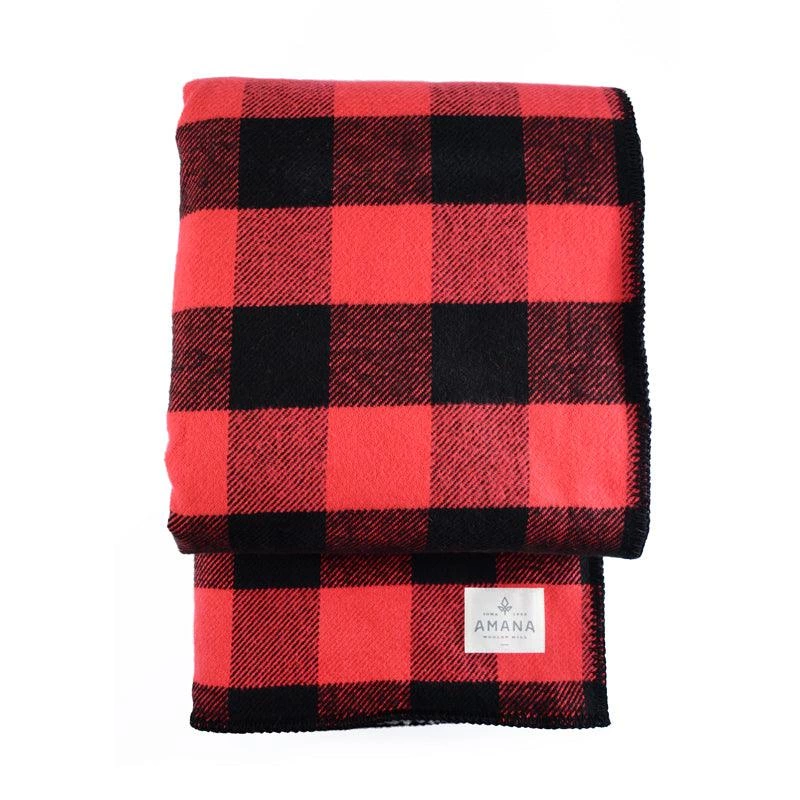
Amana Woolen Mill
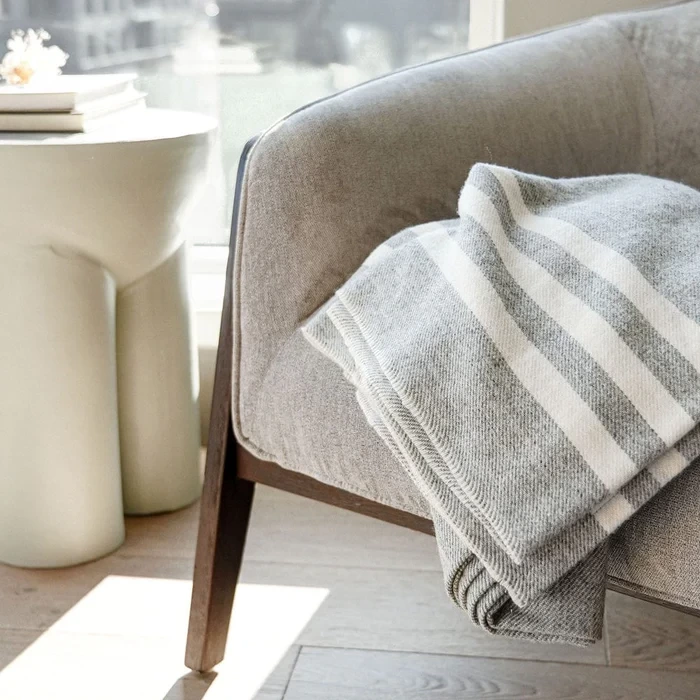
Background and Positioning: Iowa‘s only remaining operating woolen mill, Amana Woolen Mill has been weaving fine woolens continuously since 1857. The mill’s origins trace back to 1838 in Germany, when the Inspirationist community first sold woolen blankets before emigrating to the United States. The mill is recognized as a National Historic Landmark.
Manufacturing Capabilities:
Amana produces a range of wool and cotton blankets from crib-sized baby blankets to king-sized bed blankets, along with accessories like scarves, aprons, bags, and pillows. The mill operates Sulzer looms using punch card technology alongside digital computer-controlled looms. Annual wool consumption exceeds half a million pounds-.
Product Focus: Heritage designs and eco-conscious production using natural fibers, including recycled yarn products-.
Considerations for B2B Buyers:
-
Wholesale Presence: Amana ships nationwide through wholesale operations, but public-facing B2B information is limited-.
-
Customization: The mill produces cloth for its own accessory department where seamstresses hand-sew home goods, suggesting in-house custom capability, though specific B2B ordering processes are not detailed online-.
-
Best Fit: Buyers seeking authentic American heritage textiles with a community-rooted story. Less suitable for brands requiring transparent, low-MOQ custom manufacturing or aggressive pricing.
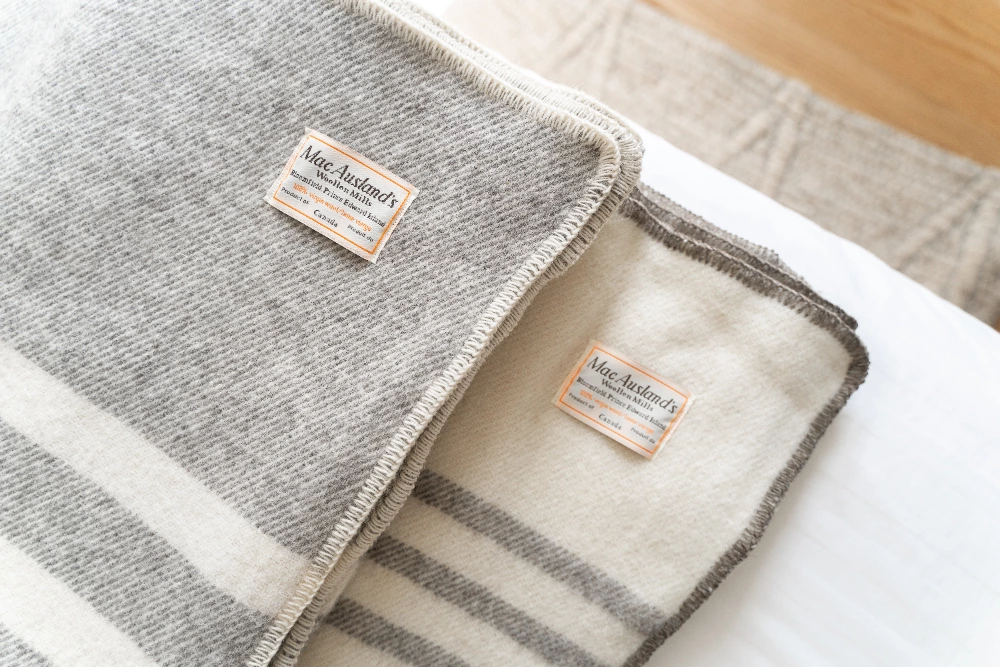
MacAuslands Woollen Mills
Background and Positioning: Operating on Prince Edward Island, Canada, MacAuslands began as a sawmill in 1870 before transitioning to a woolen mill. Since 1932, the mill has produced 100% virgin wool blankets and is now in its fourth generation of family ownership.
Manufacturing Capabilities:
The operation uses all vintage machinery, with wool sourced from P.E.I. and Nova Scotia to produce yarn. The entire team—from production to wholesale, shipping to design—operates with a handful of people. This is a small-scale artisan operation, not a high-volume industrial facility.
Product Focus: All-natural, undyed wool blankets in subtle pigmented colors. The mill emphasizes personal relationships—communication is primarily by phone, reflecting a traditional, low-tech business approach.
Considerations for B2B Buyers:
-
Scale: Limited production capacity makes this unsuitable for large-volume orders.
-
Customization: As a small artisan mill, custom capabilities are likely restricted to color and size variations within their existing wool range.
-
Best Fit: Boutique retailers and specialty shops seeking authentic, locally-made Canadian wool products. Not a practical choice for brands requiring scalable production, competitive pricing, or streamlined B2B procurement processes.
European Textile Manufacturers
Barker Textiles (Lithuania)
Background and Positioning: Barker Textiles originated in Turku, Finland in 1843 before relocating to Kaunas, Lithuania in 2001. Today, the company operates as a weaving mill specializing in natural high-quality home textiles. The International Wool Textile Organisation (IWTO) recognizes Barker as a flexible, responsible manufacturer.
Manufacturing Capabilities:
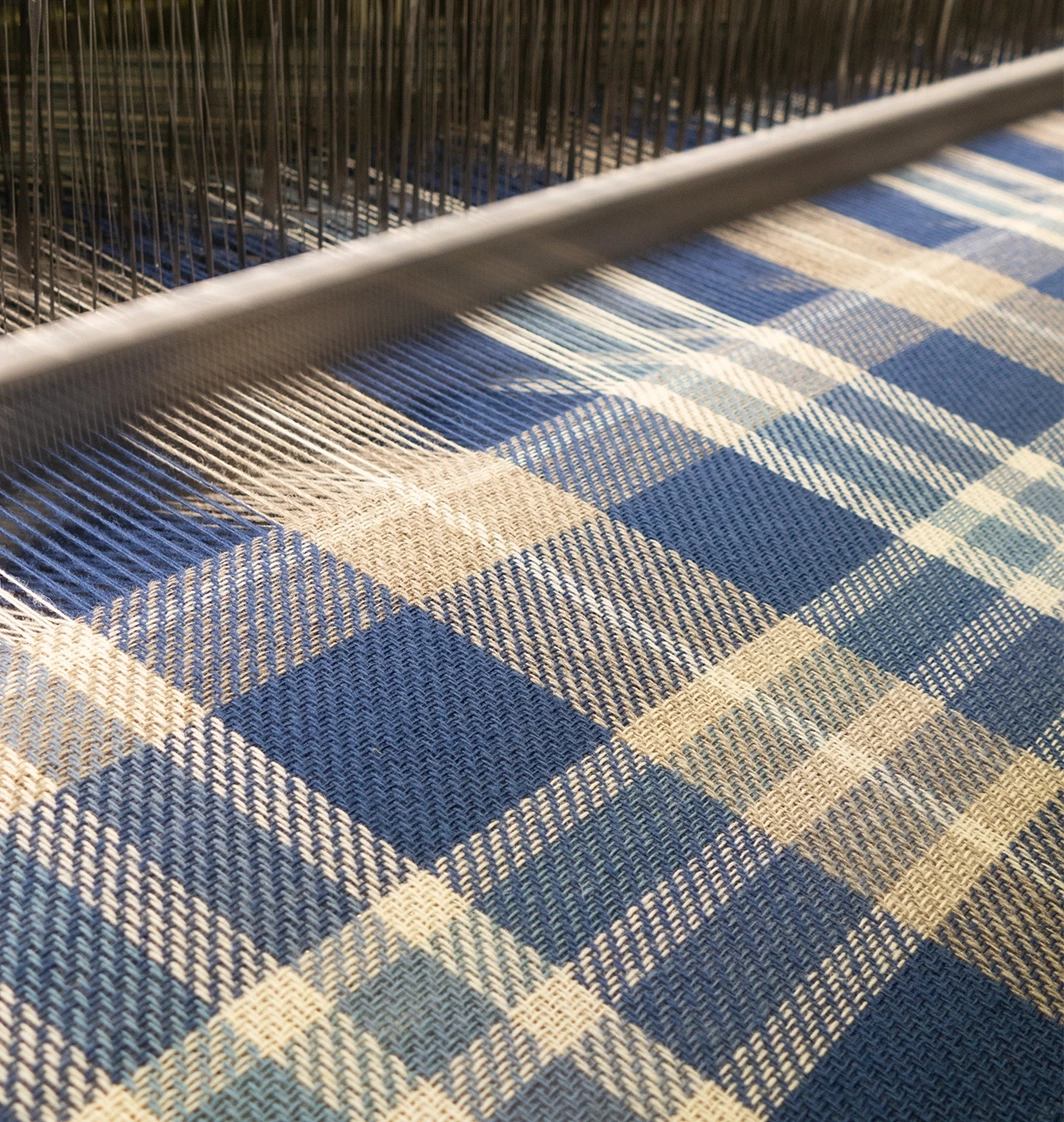
Barker handles the entire production cycle in-house—from raw material sourcing and design development to weaving, finishing, sewing, packaging, and logistics. The company operates Picanol and Bonas jacquard looms, enabling both sample creation and volume production. An in-house finishing plant and sewing department support custom labeling and packaging solutions.
Product Focus: Natural fibers including New Zealand wool, merino wool, Nordic wool, and pure cotton, along with recycled wool and cotton. Products are certified by OEKO-TEX Standard 100, Woolmark, and Responsible Wool Standard.
Customization & B2B Services:
Barker explicitly offers private-label production and contract weaving services. Their process includes design assistance, material selection, simulation previews before production, and in-house photography to help clients prepare product listings. The company works with clients ranging from design studios to retail chains.
Considerations for B2B Buyers:
-
Pricing: European manufacturing costs are higher than Asian alternatives, though likely competitive within the European premium segment.
-
Customization: Full-service offering with genuine flexibility, including low-to-mid volume capabilities.
-
Best Fit: European brands and retailers seeking natural fiber products with strong certifications, or B2B buyers who prioritize sustainability credentials and regional manufacturing. However, buyers seeking the most competitive unit pricing may find Asian alternatives more attractive.
5. US-Based Volume Suppliers
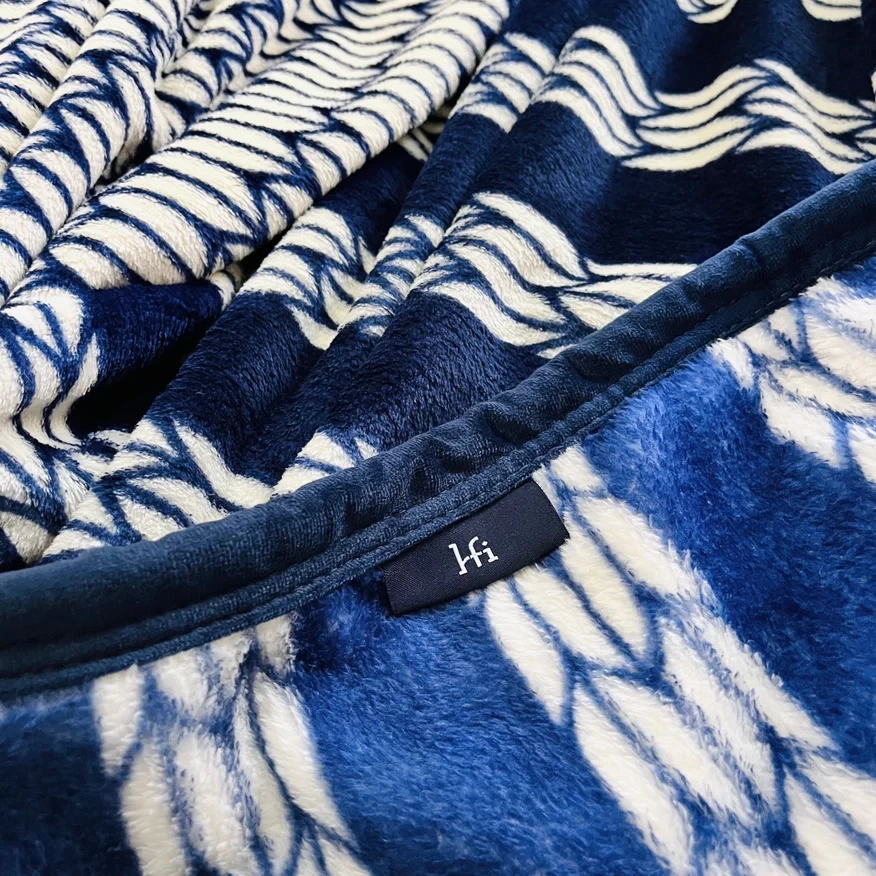
HFI Bedding (Home Furnishings International)
Background and Positioning: HFI is a global fabric and home furnishings manufacturer with a significant US manufacturing footprint. The company has been expanding its American production capacity, including a bedding manufacturing plant in South Carolina.
Manufacturing Capabilities:
HFI operates as a large-scale manufacturer, producing bedding, decorative accessories, pillows, table linens, and pet beds-. The company has expanded into outdoor textiles and serves interior design, architecture, hospitality, and contract markets-.
Product Focus: Broad home textile categories with a focus on volume production for major retailers.
Considerations for B2B Buyers:
-
Scale: Large manufacturer oriented toward big-box retail and hospitality contracts. Minimum order quantities are likely substantial.
-
Customization: While HFI produces private-label goods, the company’s scale suggests limited flexibility for small-batch or highly customized orders.
-
Best Fit: Large retailers, hotel chains, and institutional buyers requiring high-volume, standardized production. Not suitable for emerging brands, small-to-mid-size businesses, or buyers requiring low MOQ flexibility.
The Asia-Based Manufacturing Alternative
For B2B buyers who have evaluated the above manufacturers and identified limitations—whether high pricing, high MOQs, limited customization transparency, or restricted scalability—Asia-based manufacturers present a compelling alternative. Among them, KRCareer operates a factory-direct model that prioritizes production efficiency, flexible ordering, and certified compliance.
KRCareer Overview:
With over eight years of export experience and five years of specialized production experience, KRCareer is a home textile manufacturer serving primarily the European and American markets. The company holds BSCI and Sedex certifications (audited by BV), along with GRS and OEKO-TEX certifications across its fabric supply chain.
Manufacturing Infrastructure:
-
Facilities: Two sewing factories spanning 4,000 square meters, plus an in-house R&D team
-
Daily Capacity: Up to 15,000 blankets
-
Quality Control: Inline and final inspections with photo and video documentation provided to buyers
-
Sample Development: Physical samples developed for approval prior to production
Key Advantages for B2B Buyers:
1. Transparent, Competitive Pricing
Factory-direct operations eliminate intermediary margins. For custom blanket orders of scale, this translates to significant cost savings compared to heritage or European manufacturers.
2. Flexible MOQ Structure
KRCareer offers “no strict MOQ for in-stock materials,” enabling small-batch testing and market validation. For custom fabrications, MOQs remain negotiable, balancing accessibility with production efficiency.
3. Verified Compliance
With BSCI, Sedex, GRS, and OEKO-TEX certifications, KRCareer provides documented assurance of ethical manufacturing and material safety—essential for brands selling into regulated European and North American markets.
4. OEM & ODM Expertise
Whether executing buyer-provided specifications (OEM) or collaborating on design development (ODM), the in-house R&D team supports brands at any stage of product maturity.
5. Transparent Production Process
The ordering workflow is clearly structured: Inquiry → Sampling → Approval → Production → Inspection → Shipping. Quality inspection reports, photos, and videos are provided before shipment, addressing a primary buyer concern—verifying quality from a distance.
Considerations for Buyers:
Factory-direct partnerships require clearer specification development than full-service design houses. Buyers benefit from having detailed technical packs or reference samples. Lead times typically run 30–45 days after sample approval, plus shipping.
Comparative Summary: Price, MOQ, and Production Flexibility
The table below synthesizes the positioning of each manufacturer across key procurement dimensions:
| Supplier | Price Positioning | Typical MOQ | Production Control | Ideal Buyer Profile |
|---|---|---|---|---|
| Faribault Mill | Premium | Medium-High | Vertical (in-house) | Brands seeking “Made in USA” heritage positioning |
| Amana Woolen Mill | Premium | Medium | In-house mill | Heritage-focused retailers, specialty shops |
| MacAuslands | Premium | Small (artisan) | Small-scale in-house | Boutique Canadian wool product buyers |
| Barker Textiles | Premium-Medium | Flexible | Full in-house | European brands prioritizing natural fibers & certifications |
| HFI Bedding | Volume-based | High | Large-scale | Major retailers, hospitality, institutional buyers |
| KRCareer | Competitive | Very flexible | Factory-direct | Volume buyers, emerging brands, cost-conscious importers |
Key Insight: Heritage and European manufacturers excel at brand storytelling and natural fiber expertise but typically command premium pricing with less transparent B2B ordering. Asian manufacturers like KRCareer offer lower unit costs, greater MOQ flexibility, and documented quality control—ideal for buyers prioritizing cost efficiency and scalability.
Making the Right Choice for Your Business
Your optimal blanket factory partner depends on your specific priorities:
Choose a Heritage or European Manufacturer If:
-
Brand storytelling and “Made in USA/Canada/Europe” positioning are critical to your value proposition
-
Your target customers actively seek and pay premiums for regional manufacturing
-
Natural fiber specialization (wool, organic cotton) is your primary selling point
-
Order quantities align with their MOQ requirements
Choose an Asia-Based Manufacturer Like KRCareer If:
-
Cost efficiency and margin optimization are top priorities
-
You need flexible MOQs for testing new designs or seasonal collections
-
Your specifications are clearly defined or you need ODM support
-
You require certified compliance (BSCI, OEKO-TEX) for regulated markets
-
Production transparency and documented quality control matter to your procurement process
Hybrid Sourcing Strategy
Many successful buyers use a hybrid approach: heritage or European manufacturers for premium, limited-edition collections that leverage brand storytelling, and Asia-based factory-direct partners for core volume lines where cost and production flexibility are paramount.
Frequently Asked Questions
Q: How do I verify a blanket factory‘s quality reliability?
A: Request third-party audit reports (BSCI, Sedex), order pre-production samples, and ask for inline inspection photos and videos during manufacturing. Reputable factories will provide this documentation.
Q: What is the typical MOQ for custom blanket production?
A: Heritage and European manufacturers often require hundreds to thousands of units. Asia-based manufacturers like KRCareer offer greater flexibility, with negotiable MOQs for custom fabrications and no strict MOQ for in-stock materials.
Q: What certifications should I look for in a blanket manufacturer?
A: For European and North American markets, prioritize OEKO-TEX Standard 100 (material safety), BSCI or Sedex (social compliance), and GRS (recycled content) where applicable.
Q: How long does custom blanket production take?
A: Sample development typically takes 7–14 days. Bulk production requires 30–45 days after sample approval, plus 20–35 days for sea freight shipping.
Q: Can I order a small test batch before committing to a large order?
A: Yes, many manufacturers offer sample development or small-batch production. KRCareer, for example, offers flexible MOQs for in-stock materials, allowing buyers to test market response before scaling.
Q: Are Asian manufacturers able to meet Western compliance standards?
A: Reputable Asian manufacturers hold internationally recognized certifications. KRCareer maintains BSCI, Sedex, GRS, and OEKO-TEX certifications, audited by BV, demonstrating compliance with Western market requirements.
Conclusion
The global blanket manufacturing landscape offers distinct pathways for B2B buyers, each with unique trade-offs.
Heritage manufacturers like Faribault Mill, Amana Woolen Mill, and MacAuslands deliver unmatched brand storytelling and authentic craftsmanship—but at premium pricing with less transparent B2B processes. European manufacturers like Barker Textiles excel in natural fiber expertise and certifications, with genuine customization capabilities, yet carry higher regional production costs. Large-scale US suppliers like HFI Bedding serve high-volume institutional buyers but offer limited flexibility for emerging brands.
For B2B buyers seeking cost efficiency, production transparency, and flexible ordering, Asia-based manufacturers present a compelling alternative. With certified compliance, factory-direct pricing, and negotiable MOQs, KRCareer represents a viable partner for brands and retailers who prioritize value without compromising on quality standards.
The right choice depends on your business model, target market, volume requirements, and budget. By evaluating potential partners against the criteria outlined in this guide—pricing, MOQ, production control, compliance, and transparency—you can build a sourcing strategy that supports sustainable growth and product excellence.